Food Safety at Home
Clean, separate, cook and chill. The CDC four steps to prevent food poisoning at home: clean, separate, cook and chill, with safe cooking temperatures and fridge settings.
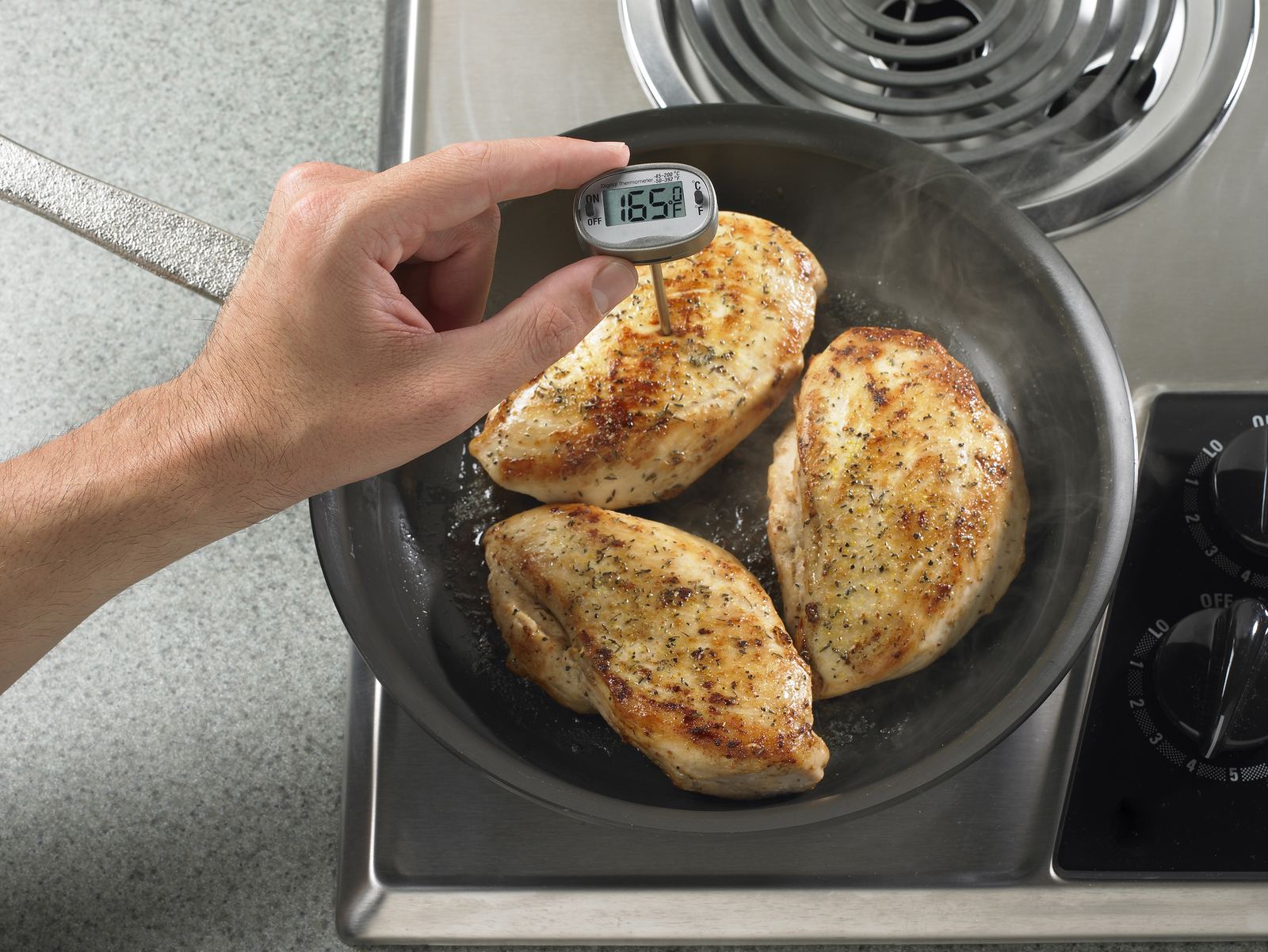
Checking chicken with a food thermometer: USDAgov, Public domain
Why food safety matters
Some foods carry germs you cannot see, smell or taste. The WHO estimates that about 866 million people around the world, almost 1 in 9, fall ill each year after eating contaminated food. The CDC lists riskier foods including raw or undercooked poultry, meat, seafood and eggs, raw sprouts, unwashed produce, cut melon, unpasteurized milk, juice or soft cheese, and raw dough or batter made with uncooked flour. The WHO adds that children under 5 carry 29% of the health burden from unsafe food.
The good news is that a few simple kitchen habits cut the risk. The CDC sums them up in four steps.
Clean and separate
Clean: wash your hands before, during and after preparing food and before eating, for at least 20 seconds with soap and water. Wash utensils, cutting boards and counters with hot, soapy water after each food item, and rinse fresh fruits and vegetables under running water.
Separate: keep raw meat, poultry, seafood and eggs away from ready-to-eat food in your cart, in the fridge and on the counter. Use one cutting board for raw meat and another for produce and bread. The CDC also notes that raw chicken does not need washing, because rinsing it can spread germs to the sink and counter.
Cook to the right temperature
For most foods, color and texture cannot tell you if they are safely cooked, the CDC says, so use a food thermometer. Safe internal temperatures are 145°F for whole cuts of beef, veal, lamb and pork (then rest for 3 minutes), 145°F for fish with fins, 160°F for ground meats, and 165°F for all poultry and for leftovers and casseroles.
When microwaving, follow the standing time and check that reheated food reaches 165°F.
Chill promptly
Bacteria multiply rapidly in the Danger Zone between 40°F and 140°F. The CDC advises never leaving perishable food out for more than 2 hours, or 1 hour if it is above 90°F. Keep the fridge at 40°F or below and the freezer at 0°F or below, and pack warm leftovers into shallow containers so they cool faster. If a food is recalled, throw it away.
If food poisoning symptoms are severe or do not improve, contact a licensed healthcare provider.
Facts on this page were checked against these sources.
- Checking chicken with a food thermometer: USDAgov, Public domain
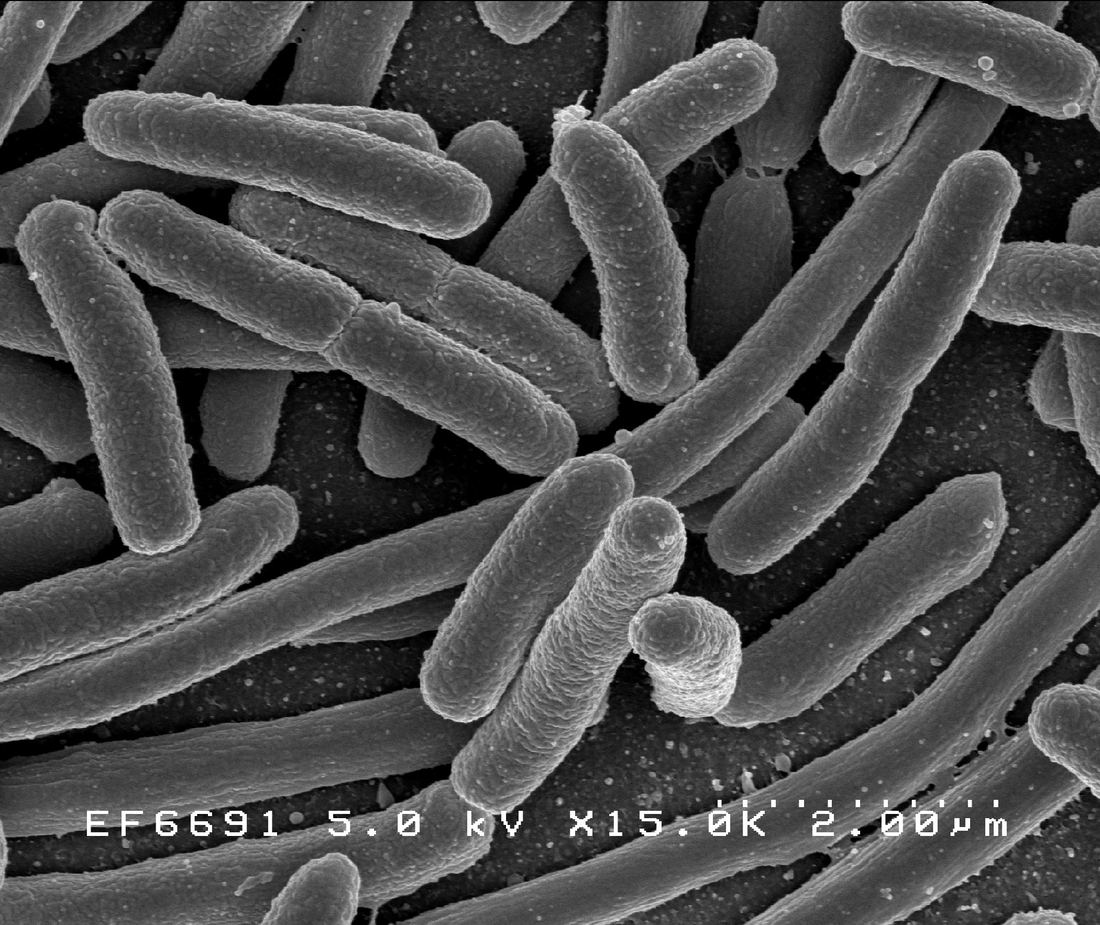
- E. coli bacteria up close: NIAID, Public domain
Text written by Microscopic Doctor.